How to Price a Digital Asset When Platform Risk Is Hiding in the Multiple

In short
The multiple isn't the answer. Durable profit is. Here's how to price an asset when the foundation is borrowed.
The multiple is a starting point, not an answer
Two businesses. Both generating $4,000 a month in profit. Both six years old. Both listed in the same price range with a tidy 3.5× multiple applied.
One of them is worth the asking price. The other one isn't.
The first earns from a diversified email list of 14,000 subscribers. Traffic comes from direct and search in roughly equal measure. Revenue splits across a productized service, a digital download, and a small recurring membership. No single source accounts for more than 35% of income.
The second earns entirely from organic search. One keyword cluster – maybe two. It ranks well today. It ranked well last year. The seller has screenshotted consistent revenue across 24 months and they are not lying: the numbers are real.
The difference between these two businesses isn't the profit figure. It's the question neither listing answers: what happens to that profit when the foundation shifts?
Most valuation advice stops at the multiple. "3× to 4× annual profit for stable micro-SaaS, slightly less for content sites, slightly more for recurring revenue." That framing isn't wrong, exactly. But it treats profit as a fixed fact when it's usually a fragile estimate about the future.
Durability is the variable everybody ignores. And ignoring it is why buyers overpay for weak assets and sellers underprice strong ones.
Where the foundation is borrowed
Borrowing someone else's infrastructure is how most small digital businesses are built. There is nothing wrong with that. The problem is when the valuation pretends the borrowing doesn't exist.
Four dependencies show up repeatedly in sub-$500k digital assets, and each one is a discount to the multiple, not a footnote in the due diligence.
Organic search is the one most buyers encounter first. A content site or SEO-driven SaaS earning on the back of a keyword ranking is one algorithm update from a revenue shock. Google's 2023 Helpful Content update broadly reclassified entire categories of sites, and operators who had relied on consistent rankings for years watched their traffic – and their revenue – fall sharply within weeks. The update that hits your listing won't announce itself. This isn't theoretical risk; it's a recurring event with a documented history. The multiple should reflect it.
App store dependency is less visible in listing descriptions but just as real. An iOS or Android app that earns through the App Store or Play Store sits on borrowed land. Policy changes, review algorithm shifts, and category reclassifications have killed revenue for operators who thought their position was secure. Apple and Google are not partners. They are landlords who can raise the rent or lock the door without warning, and their dispute resolution process is not optimised for the small operator on the other end.
Single-channel paid acquisition is the third pattern. A business that runs on paid traffic through one channel – Meta, Google, TikTok – is operationally solvent until CPMs spike, the algorithm shifts, or the account gets flagged. Paid channels are efficient. They are also rented. The moment the economics of that channel change, the revenue model needs to be rebuilt from scratch, and there is no grace period while that happens.
Third-party API dependency has become more visible since AI tooling started appearing in most product categories. A product built on top of OpenAI, Stripe, Twilio, or any comparable external service is paying infrastructure rent that can go up, change terms, or disappear. When the pricing model of the underlying service changes, the product's margin changes with it – sometimes fatally. ChatGPT wrapper products that were selling for healthy multiples in 2023 looked very different by 2025 as API pricing shifted and the novelty premium evaporated.
None of these dependencies makes a business worthless. They make it specific. The honest version of valuation is: how much of this profit survives the most obvious adverse event?
How to discount for it
The tool here is a stress test, not a formula.
Pick the primary dependency. Ask: what happens to monthly profit if that dependency deteriorates by half? If the top keyword cluster loses 50% of its traffic. If the main acquisition channel doubles in cost. If the API pricing increases 40%.
If the business survives that scenario – still profitable, still operational, revenue hurt but not destroyed – the dependency is a moderate risk factor. Adjust the multiple down slightly from a comparable asset with no dependency. A 3.5× becomes a 3× or a 2.8×. The business is real; it just has an identifiable fragility.
If the stress test result is catastrophic – revenue essentially goes to zero, the model breaks, there's no fallback – you are not looking at a business with a dependency. You are looking at a bet on a single external condition continuing to hold. That is a different kind of asset entirely, and the price should reflect what it actually is.
Some sellers will push back on this framing. They'll point to 24 months of stable traffic and argue that stability is a kind of durability. It isn't. Stability tells you what happened. It says nothing about what happens next. A keyword that ranked without interruption for two years is not immune to the next core update; it just hasn't been hit yet. The 2023 content reclassification caught operators who had been stable for five years.
The honest stress test does not need precise numbers to be useful. You are not trying to forecast traffic to three decimal places. You are asking a directional question: is this revenue resilient, or is it contingent?
The flip side – what you pay up for
The same logic that discounts borrowed foundations pays a premium for owned ones.
An email list with documented open rates and revenue attribution is not the same category of asset as a social following. The email list is owned. The followers are not. An account ban, a platform pivot, or a monetisation policy change can eliminate a social audience overnight. An email list survives because the relationship sits between the business and the subscriber, with no intermediary controlling access.
Multiple traffic sources are worth more than one large source, even if the total traffic is the same. A business with three meaningful acquisition channels and no single source above 40% of total is a categorically less fragile asset than one with 80% of traffic on a single organic keyword. Diversification is not hedging for its own sake; it is the structural equivalent of not having a single-customer dependency.
Recurring revenue with low churn is the most reliable durability signal in the sub-$500k range. The business is not relying on continuous new acquisition to sustain its revenue line. It already has customers who have decided to stay, and that decision – made by real people with real alternatives – is worth something in the price.
Switching costs are the final lever. If users would find it genuinely inconvenient or costly to stop using the product – because their data lives there, because the workflow is embedded, because the alternative requires rebuilding something they have already built – the revenue is stickier than the raw churn number suggests. Switching costs don't appear on the P&L. They show up in retention, and retention is the closest thing to a guarantee a small digital business can offer.
None of these premium factors are binary. You're rarely looking at a perfectly diversified, email-first, low-churn product with zero platform exposure. You are looking at a mix of strengths and vulnerabilities and deciding what the right price is for that specific combination.
Pricing as a two-sided trust exercise
The same asset that gets overpriced by a seller can get underpriced by a buyer – and both mistakes come from the same failure to anchor valuation to durability.
Sellers with a genuinely strong asset often don't know how to articulate what makes it strong. They present the revenue number and the standard multiple and leave the durability story untold. The buyer, who hasn't been taught to look for it either, applies the default multiple and pays less than the asset warrants. The deal closes at a discount. Both parties leave something on the table.
The opposite failure is equally common. A seller with a platform-dependent business is often not deliberately obscuring the risk – they simply don't experience it as risk. The traffic has been consistent. The rankings have held. The multiple seems reasonable. The buyer, who hasn't run the stress test, pays a price calibrated for durable profit and gets something considerably more fragile. Neither party is dishonest. They are just working from the same unexamined frame.
Transparent, durability-adjusted pricing is what makes a small market function properly. When buyers and sellers are working from the same shared understanding of what the profit is made of and how likely it is to continue, negotiations become more honest and deals become more defensible on both sides. Listings on Indiemaker include asset details precisely because context is how pricing becomes legible. A multiple without context is a number without meaning.
One last stress test before you walk away
After the valuation is done and the price looks right, run one more check.
Assume the single most damaging plausible event in the next 12 months actually happens. The core update hits. The API pricing doubles. The app gets flagged in a policy review. The acquisition channel's CPMs move against you.
Now ask: at this price, is the deal still defensible?
If the answer is yes – because you've priced the risk in, because the stress scenario still leaves a viable business, because there are real fundamentals underneath the dependency – you have done the work. The risk is not gone; it is correctly priced, which is a different thing, and a better thing.
If the answer is no, the price isn't adjusted yet. Set it aside. Come back to it when the number reflects what you're actually buying, not the optimistic version of what the seller is selling.
You are not buying last year's revenue. You are buying a bet on next year's, and the multiple is not the price of the asset. It is the price of the conditions under which that asset earns.
More on pricing

A single asking price starts a tug-of-war. A defensible range starts a better conversation. Here's how to build one.
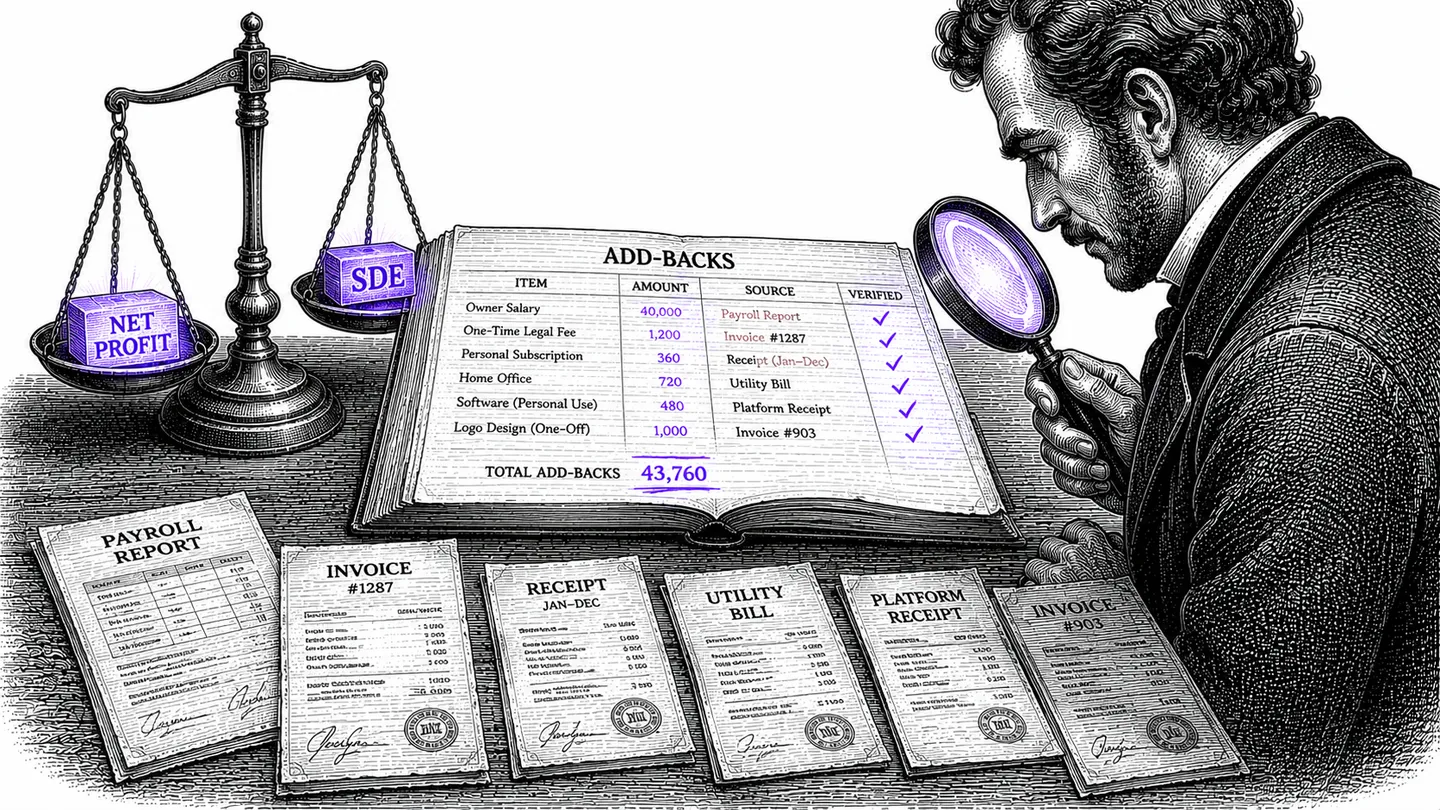
Add-backs are the most misunderstood line in a small-business valuation. Here is what an SDE add-back really is, which ones buyers accept, …
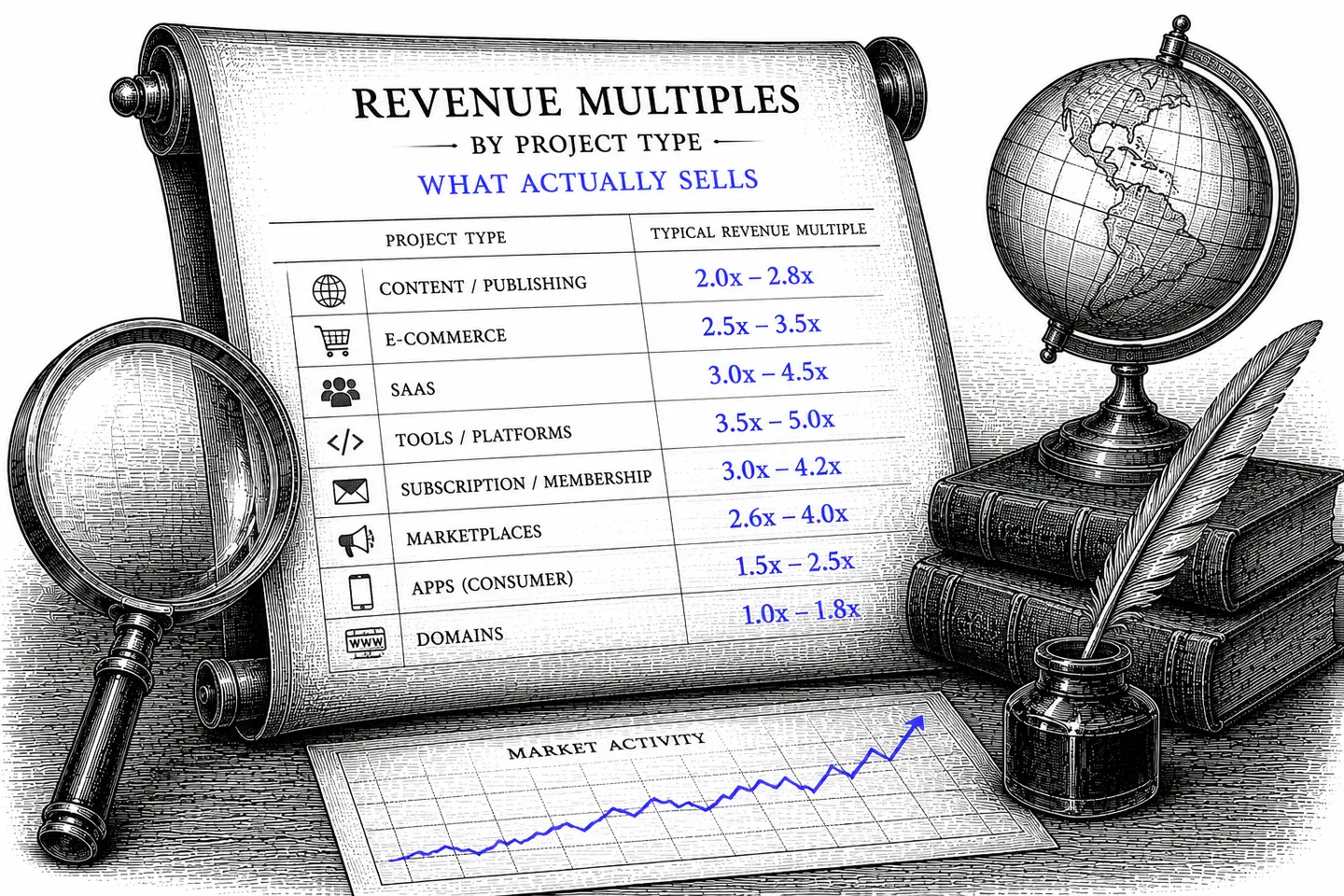
Use a 2 to 4x multiple" is incomplete advice. The right range depends on type, consistency, and transferability. Here's the actual table.