What Makes a Digital Project Actually Transferable (And Why Most Aren't)
In short
Most digital project deals don't fall apart on price. They fall apart in the handover.
Most acquisition content stops at the deal. Price agreed. Contracts signed. Handshakes exchanged.
What it doesn't cover is the six weeks after that.
The payment processor suspending the account while the new owner applies as a fresh merchant. The email newsletter tool locked to a personal Gmail that the seller uses for a dozen other things. The social media accounts that technically can't be transferred under the platform's terms of service. The Slack channel full of support context that lives in the seller's personal workspace and gets wiped when they leave.
None of this is unusual. It's the default. Most digital projects aren't built to be transferred – they're built to run. The difference matters enormously once you're the person holding the keys.
The gap nobody talks about
Valuation gets a lot of attention in the world of micro-acquisitions. Multiples, revenue quality, churn rates, traffic sources. These are real things worth understanding, and the content ecosystem around them has grown steadily.
The operational reality of handing something over? Almost nothing.
That gap is partly because transferability is boring until it's a crisis. It doesn't show up as a line in a profit and loss statement. It doesn't affect the asking price until the deal is already falling apart. And by then, both sides are too invested to walk away cleanly.
For buyers, it shows up as unexpected timelines – weeks of being technically the new owner without being able to receive payments, retain staff access, or take over customer communications. For sellers, it shows up as post-sale support obligations that drag on months longer than expected, or deals that collapse entirely at the final stage because the handover is messier than either party anticipated.
The projects that sell cleanly, transfer smoothly, and generate repeat acquirers are the ones where this was thought about before it became a problem.
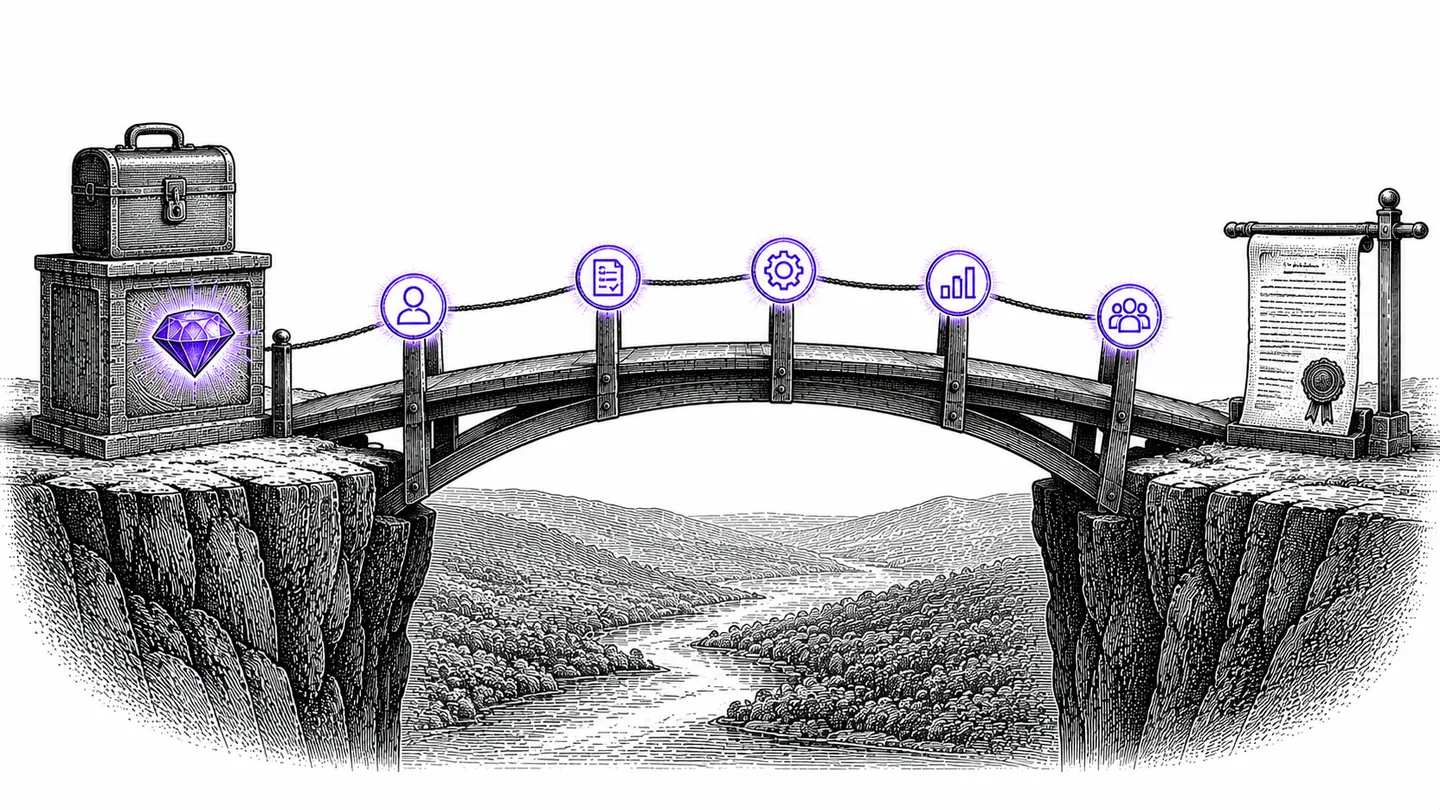
The four layers of a digital project handover
There isn't one handover – there are four. Each has a different risk profile, a different timeline, and a different failure mode.
Technical
Code, hosting, domain, DNS. This layer looks complicated and isn't. A competent buyer can receive repository access and transfer a domain in an afternoon. The risk here is mostly paperwork – registrar unlock codes, DNS propagation, SSL certificates – rather than anything structural. It rarely kills deals.
Commercial
Payment processors, subscriptions, software licences, third-party contracts. This is where things break. Payment processor accounts are not transferable in any conventional sense – the buyer is a new merchant, and they apply from scratch. This can take anywhere from two to six weeks, is subject to the processor's approval criteria, and there is no guarantee the terms will match what the seller had. Subscription accounts for tools like Stripe, Paddle, or Braintree may carry historical data the new owner needs but can't simply inherit. Software licences may be seat-based and tied to an email domain the seller controls. Every commercial dependency is worth mapping before the deal closes, not after.
Audience
Email lists, social media accounts, community memberships. Email lists are the cleanest transferable asset in this category – the list belongs to whoever controls the sending domain and the list tool account, and that can be handed over with a few credential changes. Social media is messier. Most platforms prohibit account transfers in their terms of service; what's being transferred in practice is a set of credentials and a tacit understanding that nobody will check. That's a compliance risk that buyers should price in. SEO equity is domain-linked and transfers with the domain, which is clean – but rankings built on backlinks pointing to old URLs, or tied to content the seller is taking down, are less durable than they look.
Knowledge
This is the most consistently underestimated layer, and the hardest to transfer. A founder who has run a product for two or three years carries an enormous amount of operational context that isn't written anywhere. The customer segment that generates support tickets at a higher rate than others. The recurring edge case in the payment flow that requires manual intervention every thirty days. The integration partner whose contact is a personal relationship rather than an official account. The seasonal traffic pattern that looks like a bug but isn't.
None of this is malicious. A founder who's run a product for three years has solved these problems so many times they've stopped registering as problems. They surface, invisibly, the moment the founder leaves. The new owner discovers them one by one, usually in the first ninety days, usually at the worst possible moment. That is not a due diligence failure – it's a structural one. Knowledge that lives in a person's head instead of a document cannot be transferred by signing a contract.
The payment processor problem, specifically
It's worth dwelling on the commercial layer, because the payment processor issue is genuinely surprising to most first-time buyers.
The intuitive assumption is that a payment processor account is an asset that transfers with the business. It isn't. From the processor's perspective, a change of legal ownership is a new merchant relationship – new KYC checks, new risk assessment, new approval decision. The previous account's history doesn't port over. A business with two years of clean Stripe history doesn't give the incoming owner any preferential treatment on their application.
What this means practically: there's a window after a deal closes where the new owner cannot receive payments. How long depends on the processor and the merchant category. Two weeks is optimistic. Six weeks is not unusual. If the business has any recurring revenue on monthly billing cycles, that's a real operational gap.
The risk is higher in certain categories. Businesses with digital goods, subscriptions, high average transaction values, or international payment volumes are more likely to face extended review periods, reserve requirements, or – in some cases – outright rejection. A payment processor that looked at the business and approved it once isn't a prediction that they'll approve the next owner.
This is one of the structural problems Indiemaker has worked through directly. The insight from that experience is straightforward: the issue is never the payment provider – it's the structure. Platforms that handle ownership transfers cleanly are the ones that keep themselves out of the payment flow entirely, working with licensed third parties who specialise in the protected transfer. That same logic applies at the individual project level. The cleanest transfers use an escrow arrangement that sits outside both parties, with payment released against agreed handover milestones.
What high-transferability looks like
The difference between a project that hands over cleanly and one that doesn't comes down to structural choices made long before the sale was even considered.
Keep the project's accounts and identities separate from your personal ones. A business email address that lives on the product domain is easy to transfer; a Gmail account tied to your personal identity is not. Payment processor accounts opened in a business name, with a business bank account, are handled differently than accounts tied to your personal tax ID. The separation isn't complicated – it's just rarely done, because when you're building something, you're not thinking about handing it over.
Document third-party dependencies as you accumulate them. Not a full operational manual, though that helps – at minimum, a list of every tool the business depends on, who the account is registered to, how it's billed, and what happens to the data if the account closes. This takes thirty minutes to put together and becomes the buyer's first due diligence document before they've even asked for it.
Separate the product's identity from yours. This is the knowledge layer problem in structural form. If the product is known by your name, marketed through your personal social presence, and supported via your personal email, the handover involves asking customers to trust a stranger while simultaneously noticing that the person they trusted has left. Projects where the brand has its own identity – its own voice, its own handles, its own support contact – are easier to hand over because the continuity isn't personal.
Build the knowledge transfer into the deal structure, not as an afterthought. A two-week handover call at the end of a transaction is not enough. Ongoing support obligations, knowledge documentation as a deal condition, or a transition period where both parties have visibility into operations – these are the structures that experienced acquirers insist on and first-time sellers often don't anticipate. There's a repeatable way to prepare for this that turns a scary handover into a boring one.
How to evaluate transferability when you're buying
Before you sign anything, run through these layers explicitly.
On the commercial side: ask for a list of every payment processor, subscription, and third-party contract. For each one, confirm who it's registered to and whether it can be transferred or whether you'll be reapplying from scratch. Ask specifically about the payment processor – how long the account has been active, what the monthly volume looks like, and what the reserve situation is. A seller who hasn't thought about this question hasn't thought about the handover.
On the audience side: confirm that email list ownership transfers cleanly with the domain and tool account. For social accounts, understand the platform's terms and what the seller is actually transferring – credentials are not the same as a clean account transfer. For SEO, look at what's driving the traffic before you decide how portable it is.
On the knowledge side: ask for a rundown of everything the seller does manually, on a schedule, or in response to recurring issues. Ask what breaks when they're on holiday. Ask what customer segment generates the most support load. If there's no clear answer, the knowledge layer is undocumented and the post-transfer burden is yours to discover.
The projects listed on Indiemaker that sell quickly and hand over cleanly are almost never the cheapest ones. They're the ones where the seller has already done this thinking – documented the dependencies, cleaned up the account structure, and made the knowledge layer visible. That preparation has a real value. For buyers, it's worth paying for.
High-transferability is not a nice-to-have. It's a price signal, a risk indicator, and increasingly a baseline expectation for buyers who have been through one messy handover already.
The deal is the easy part. The handover is where the work actually starts.
Indiemaker is a curated platform for digital project ownership transfers. Listings are reviewed for completeness, and our structured handover process is built around protecting both sides through the transition.
Browse current listings on Indiemaker
Further reading:
More on transfer

Terms are agreed and the clock starts on the riskiest week of the deal. A day-by-day playbook for the transfer window, from …
Escrow.com is the default way to settle a digital business sale safely. When it is not available in your country, here are …

Escrow is the right way to close almost every small deal. For the handful where it isn't available, here's how a safe …