How to Buy and Sell YouTube Channels: The Ultimate Guide for Digital Entrepreneurs

In short
A practical guide to buying and selling YouTube channels: what drives value, how channels are priced on annual profit, what actually transfers, and the platform risks that can break a deal.
Buying an established YouTube channel lets you skip the slow, uncertain work of building an audience from scratch and start with a catalogue, a subscriber base, and, in the better cases, existing revenue. Selling one lets a creator turn years of effort into capital for the next project. Neither is straightforward. A channel is a living asset that depends on an algorithm you do not control, so the price you pay or accept has to reflect what genuinely transfers and what does not.
This guide covers how YouTube channels are valued, what to check before you buy, what to prepare before you sell, and how to run the transaction cleanly.
Is it legal to buy and sell YouTube channels?
YouTube's terms of service discourage transferring accounts, so a channel sale sits in a grey area rather than a clearly sanctioned process. In practice, channels change hands regularly, and YouTube's enforcement is aimed mainly at spam, scams, and account theft rather than legitimate ownership changes.
The way to keep a deal defensible is to handle it openly:
- Be fully transparent between buyer and seller about history, revenue, and any past strikes.
- Transition ownership gradually rather than flipping everything overnight, which reduces the chance of triggering a security review.
- Route the money through transaction escrow via escrow.com so neither side is exposed while the handover completes.
Because YouTube can act against any account at its discretion, platform risk is a permanent feature of this asset class. Price it in rather than wishing it away. Our guide to pricing a digital asset with platform risk goes into how to discount for it.
Why buy a YouTube channel
Immediate revenue. A monetised channel comes with working income streams, whether from ad revenue, affiliate links, or sponsorships. You start earning from day one instead of waiting to clear the 1,000 subscribers and 4,000 watch hours needed for the YouTube Partner Programme. A channel already making the equivalent of $650 a month is producing a return from the first month you own it.
An established audience. Building an engaged audience is the hardest part of YouTube. Buying a channel gives you a subscriber base you can build new content on, cross-promote to, or take to sponsors. You are buying accumulated trust that would otherwise take years to earn.
Time. Starting from zero can take years to gain traction. An established channel lets you focus on optimising and growing what already works rather than fighting the algorithm from a standing start.
What to check before you buy
A thriving channel is appealing, but the appeal is exactly why you should slow down and verify. Work through the following before you make an offer. For a fuller checklist, see our guide to due diligence on a sub-$500k digital business.
Monetisation status. Confirm the channel is monetised and identify every income source. Most channels earn through the Partner Programme, but others rely on affiliate marketing, merchandise, or brand deals. Check for any demonetisation risk. A channel with past policy violations can lose monetisation, and that risk transfers to you.
Channel age and history. An older channel with a steady upload record and consistent engagement generally carries more weight with the algorithm and its audience. Request the full account history, including any community guideline strikes or copyright claims.
Subscriber count and engagement. Subscriber count on its own tells you little. A channel with 100,000 subscribers but almost no likes, comments, or shares does not have a loyal audience. Look at consistent views and engagement across recent videos to judge whether viewers will stay after the handover.
Content quality and workload. Assess how well the videos are made and whether the back catalogue holds up. A deep library of evergreen content is worth far more than a handful of viral hits. Also weigh the ongoing workload: if the current owner posts three times a week, you may need to match that to hold growth.
Dependence on the creator. Some channels are built around a specific personality. If the audience follows a face rather than a format, consider how they will react to new ownership and plan the transition carefully. Any paid handover support from the original creator should be agreed as a separate, cash-settled arrangement rather than folded into the purchase price.
The main risks
Policy and platform risk. If the channel carries community guideline strikes or copyright issues, you could lose monetisation or the channel itself. This is the single largest risk in the asset class, which is why the account history matters more than almost anything else.
Engagement drop-off. Audiences notice change. If subscribers do not connect with the new content or owner, engagement can fall. Have a content plan ready to re-engage them.
Legal and financial liabilities. Check for copyrighted material used without permission and any pending claims against videos. A thorough content and analytics review protects you from inheriting problems.
How channels are priced
Price a channel on its annual trailing profit, not on a headline subscriber number and not on a monthly revenue multiple. Content assets such as YouTube channels typically change hands at roughly two to three times annual trailing profit. That figure is illustrative and drawn from external market observation, not a guarantee; the actual number depends on stability, concentration, and how much of the value depends on the departing creator.
A few factors move the multiple within that range:
- Revenue stability. Steady, diversified income across ads, affiliates, and sponsorships supports the top of the range. Income that leans on one sponsor or one viral run supports the bottom.
- Subscriber trend. A channel that is still growing is worth more than one that has plateaued.
- Content type. Evergreen videos that keep earning long after publication are more valuable than topical content that decays quickly.
A channel with less than six months of trading history has no reliable profit to multiply. Value those on asset and rebuild terms instead: what the catalogue, subscriber base, and brand would cost you to recreate. For the wider picture on how different project types are priced, see revenue multiples by project type.
How to buy: a clean process
- Shortlist channels. Filter by niche, subscriber count, and monetisation status. You are making an investment, so hold out for a channel that fits your goals rather than the first one that looks good.
- Make an offer. Negotiate directly with the seller and ask the questions that matter: monthly and annual profit, main traffic sources, and any strikes or penalties. Verify the answers against analytics access rather than screenshots.
- Settle and transfer. Agree a cash or wire settlement, place the funds in escrow, and transfer the Google account tied to the channel. Release funds once the buyer confirms working access.
Why sell, and how to prepare
Creators sell for good reasons: a shift in interests, competing projects, or the chance to redeploy capital into something new. Selling a profitable channel can fund a startup or another acquisition.
To prepare, tidy the presentation before listing: organise videos, standardise thumbnails, and sharpen the branding. If the channel is not yet monetised but is eligible, get it into the Partner Programme first, because monetised channels attract more buyers and better offers. Assemble a clean data pack of analytics, revenue records, and account history so a buyer can verify everything quickly.
Final thoughts
Buying and selling YouTube channels can be genuinely profitable, but the value is only as solid as what actually transfers and survives the change of ownership. Price on annual profit, discount honestly for platform risk, verify the history, and settle in cash through escrow. Once the deal closes, the real work begins: our guide to the first 30 days after you have bought it covers how to hold onto the audience you just paid for.
More on guides

A newsletter's asset is a relationship, and relationships don't always survive a change of author. Here's how to judge engagement over list …
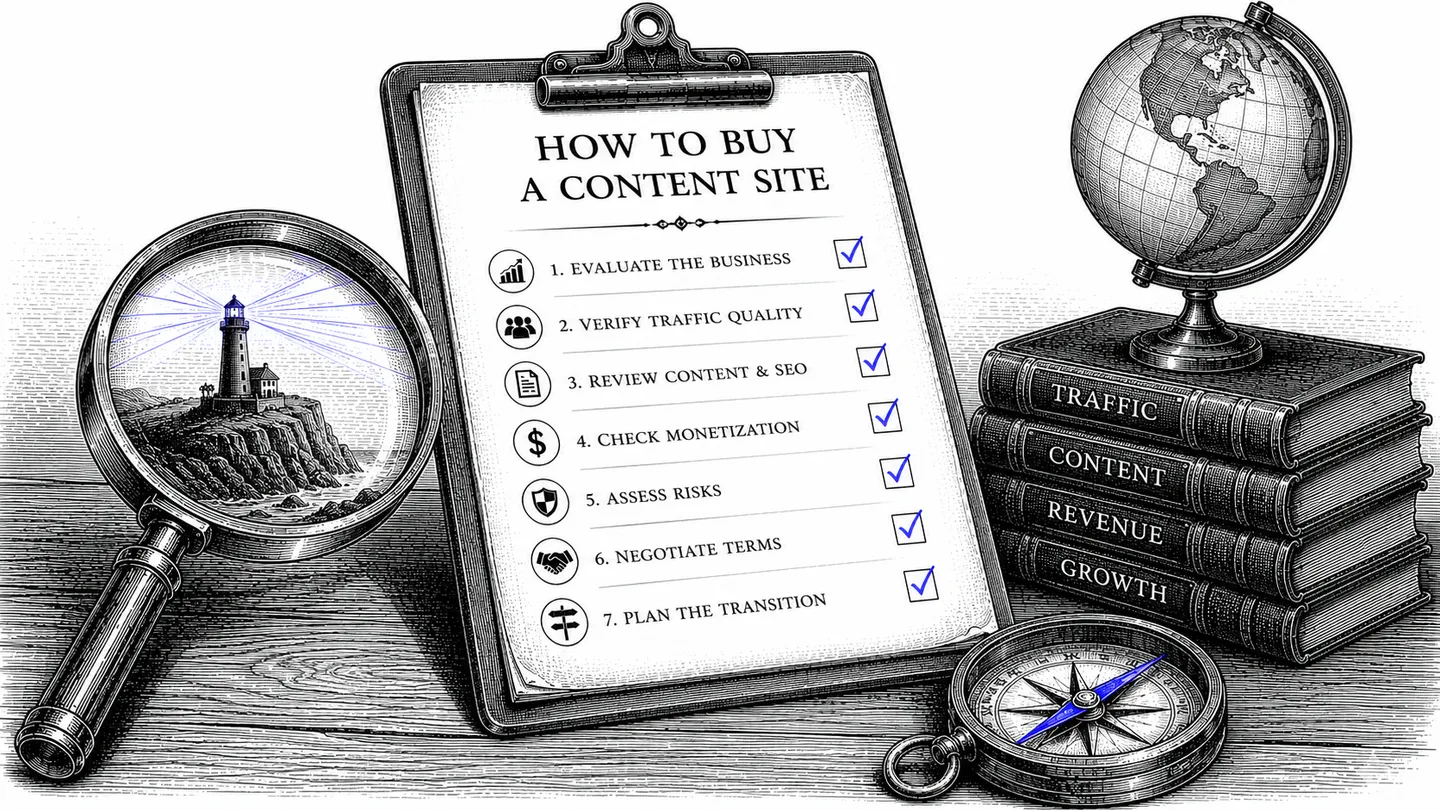
A content site is a bet on the durability of its rankings, and in the AI-overview era that bet has changed. Assume …

MRR is a headline, not a business. Here's how to read churn, cohort retention and support load before you buy a micro-SaaS, …