The Trust Mechanics of a $40k Deal Are Nothing Like a $40m One
In short
The 50% deal failure stat comes from a world with lawyers and escrow holdbacks. The $40k deal has neither.
Around half of all agreed business deals collapse before they close. It's a figure quoted so often in M&A circles that it has stopped feeling remarkable – an accepted feature of how business transfers work, something both buyers and sellers have apparently come to terms with.
What doesn't get said is where that number comes from.
It comes from deals that have LOIs. Deals with legal counsel on both sides. Deals where a 10–25% escrow holdback is standard practice, where warranty periods exist in formal contracts, where there is a team of people whose entire job is to manage the risk that one party might behave badly or the information that was disclosed turns out to be wrong. The deals that produce that number are deals where, despite all of that infrastructure, half still don't close.
Now think about what happens when you take that number and carry it across to a $40k Chrome extension sale.
There is no LOI. There is no warranty escrow that fits – the escrow infrastructure that exists was built for far larger transactions. There is no legal team absorbing the risk on either side. What there is: two people, a lot of anxiety, and a DM thread – and trust that has to be built in the first few messages, with none of the scaffolding a larger deal would have.
The stakes are identical. The tools aren't.
This is the part that most writing on deal failure gets wrong by omission. Small deals are called small because of the number, not because of what they mean to the people inside them.
A solo buyer spending $30,000 on a niche content site – money that represents two years of savings, or the proceeds of a previous exit, or the capital they've decided to back themselves with – is not taking a small risk. A seller handing over a project they've spent eighteen months building, that carries their users' data, their brand equity, their systems and relationships, is not parting with something trivial.
The fear of being scammed is the same at every deal size. The consequences of a broken transfer can be financially catastrophic at the small end in ways they simply aren't at the large end, where no single deal represents an existential proportion of anyone's net worth.
What changes at the small end is not the emotional or financial stakes – it's the institutional risk-absorption that is absent. Nobody is being paid to manage the trust gap. The professionals who buffer both parties in a large M&A transaction don't show up for deals under a million. Often they don't show up under five million.
Two bad answers people reach for
Without fit-for-purpose infrastructure, micro-deals fall into predictable failure modes. Not one, but two – and both of them kill deals, just for different reasons.
The first is peer-to-peer payment: fast, cheap, and almost entirely dependent on both parties being honest. It works until it doesn't. Buyers who've been stung this way describe sending five figures into the void and receiving, in return, a compressed folder of code and a short silence. Sellers who've been stung describe handing over everything and watching the buyer dispute the payment, disappear, or demand a refund they have no legal obligation to receive. The lack of friction in this model is also the absence of protection. People use it anyway, not because they haven't weighed the risk, but because the only visible alternative costs more in time and money than the deal itself does.
The alternative is bolting a heavyweight escrow process onto a deal that was never designed for it. Escrow arrangements built for large M&A carry cost structures and timelines that assume legal teams on both sides to run them. At the small end, that overhead eats a meaningful slice of the deal, and a process built for a complex transaction drags out one that should be simple. The verification requirements, the documentation, the sheer process weight – none of it was architected for two individuals transferring a small SaaS tool or a newsletter list. The friction isn't just annoying; it's fatal. Deals that reach the trust conversation and then hit that machinery often die at exactly the moment they should have been simplest to close.
Both failure modes share the same root: the tooling was designed for a different deal size.
The actual fix is structure, not scale
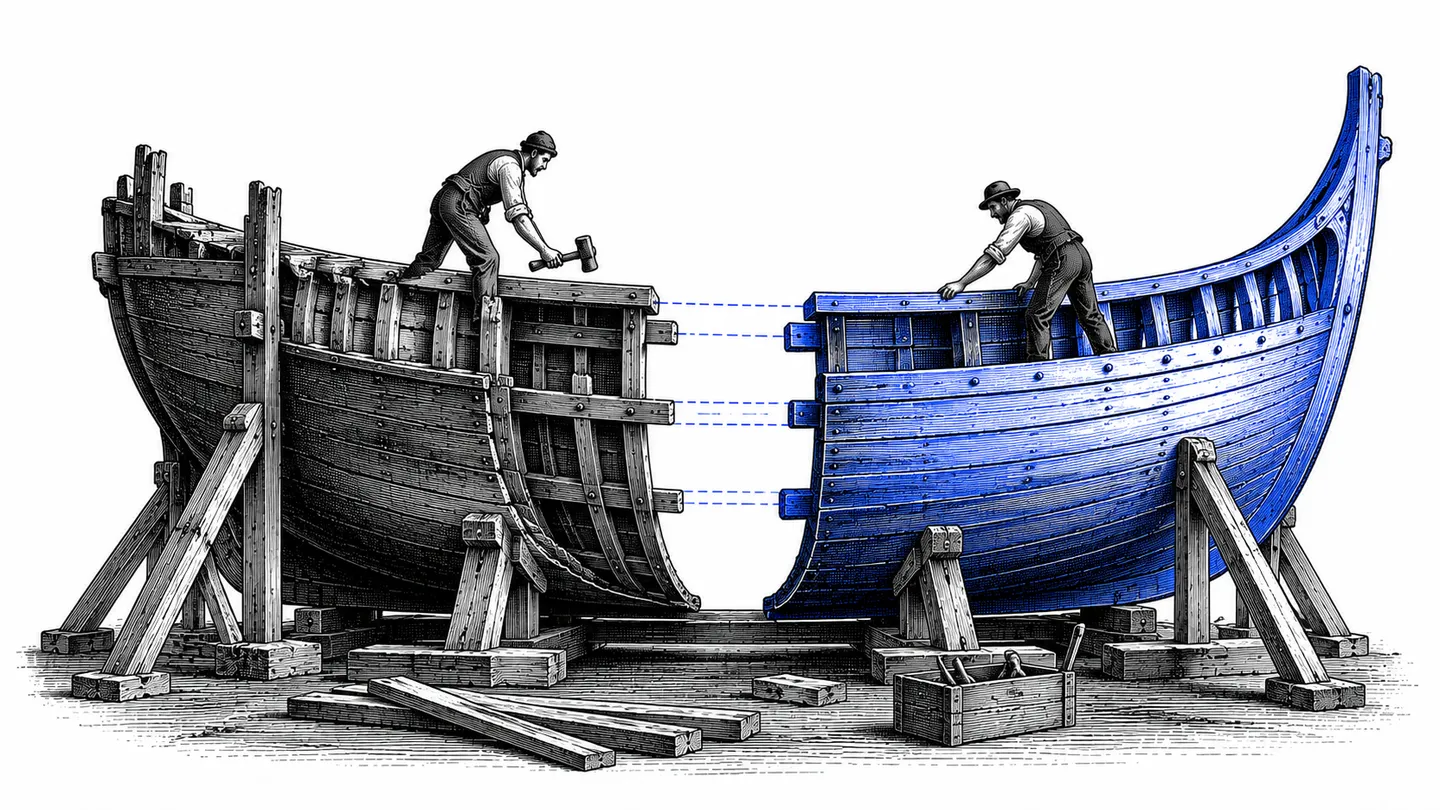
The solution to the small-deal trust problem is not a bigger vault. It's not a better version of enterprise escrow shrunk down to fit. It's a different category of solution entirely – one built around coordination and proportionate process rather than custody and institutional weight.
What actually works at this size: a licensed third party handling the protected transfer, a clear staged handover built into the process itself, and a platform that coordinates both sides rather than holding the cash. Not escrow bolted on as an afterthought. Structure.
Stage the handover and the payment. Transfer access in verified steps. Have a neutral party confirm each stage is complete before the next releases. Build the trust into the process so it doesn't depend on both parties being saintly.
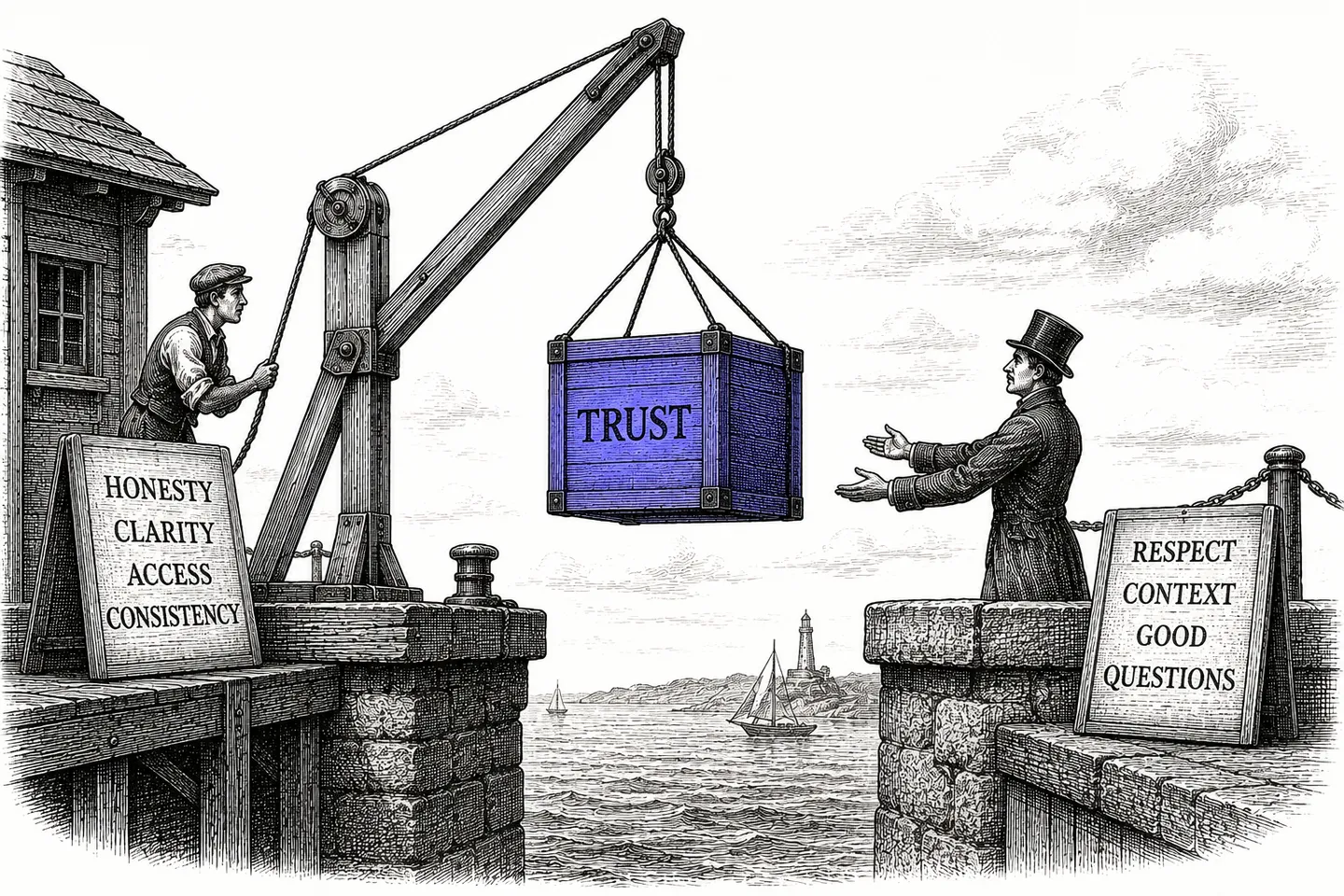
This is what the non-custodial model gets right. The platforms that have solved this – and a small number have – succeed not because they're holding large sums in a vault somewhere, but because they've removed the moment of pure faith from the transaction. The buyer doesn't have to trust the seller entirely. The seller doesn't have to trust the buyer entirely. They each have to trust a coordinated process, which is a much more manageable ask.
Why these deals have been hard to close
When trust fails or is absent, deals simply don't happen. Buyers who've been burned don't come back. Sellers who've watched a deal collapse near the finish line don't try again. The transfers that do complete at this end of the market have tended to rely on personal networks – where trust already exists – or on a reputation built up slowly over time. Neither is available to someone doing their first deal.
That's the real reason small digital transfers have been harder than they should be. Not because the assets aren't worth buying, and not because buyers and sellers don't want to transact – but because the trust mechanics never fit the size of the deal.
Fix that proportionately, and the deals that should happen can. Indiemaker is built around exactly this: not holding the money, but building the structure that lets two people who've never met complete a transfer without either one taking a leap of pure faith.
The number will keep being quoted. Around half of all deals collapse late. What nobody adds is: the half that might have survived, if the tooling had fit.
More on trust
Trust in small digital asset deals is established or destroyed before any formal due diligence starts. Here's what to watch for.

The analytics dashboard is the least reliable number in a small deal. Here's the trust hierarchy that should replace it.
The one-evening exercise that halves your sale timeline and stops buyers negotiating against your silence.