Stop Calling It a Side Hustle. Start Treating It Like an Asset.
In short
The frame you use for your project decides whether it can ever be sold. Most builders pick the wrong one.
Here's a test you can run in the next half hour. Explain your project to a stranger who might pay for it – what it does, where the money comes from, what breaks if you disappear – without opening your inbox to check anything. If you can't, you don't have an asset. You have a hobby with revenue.
Most builders fail this test. The value is usually real – the problem is where it lives: in the one place a buyer can't reach, the builder's head.
And the reason it ends up there is the language they started with.
The frame writes the documentation
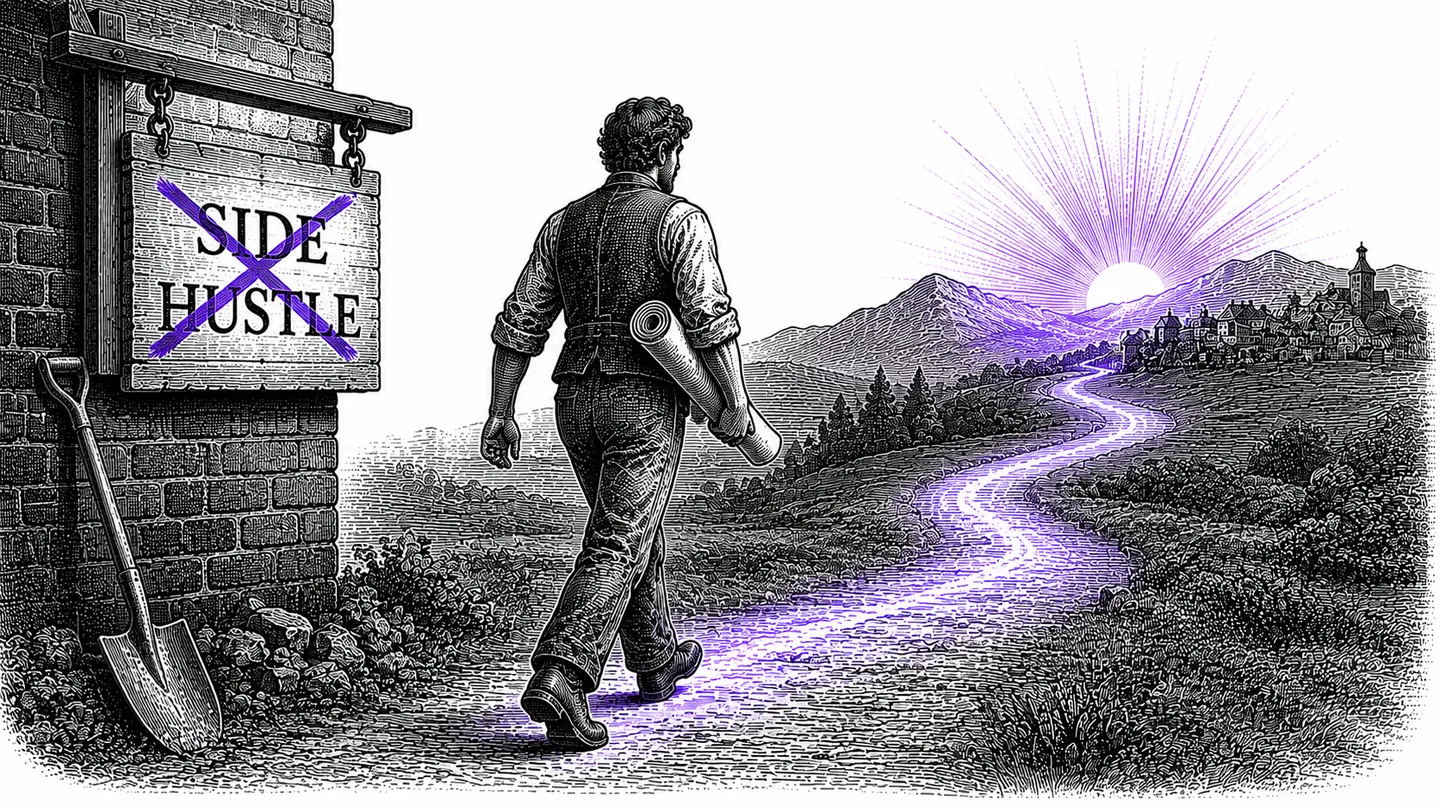
Call a project a "side hustle" and you've told yourself what it is. Something on the side. Something that doesn't warrant proper records, a decision log, or a handover doc. The bank account stays personal. The hosting sits under your own Gmail. The runbook is your memory.
None of this feels like a decision at the time. It's the default behaviour the frame produces. A passion project documents itself like a passion project.
The contradiction is worth naming: "side hustle" is the one frame where a builder asserts the project matters – it makes money, it has users, it takes up evenings – while treating it as if it doesn't. That contradiction has a cost, and the cost has a due date.
What "asset" means in operational terms
An asset is a thing that can be transferred, valued, and operated by someone who isn't you. Not a metaphor. Not a mindset slogan.
Three questions tell you which side of the line you're on:
- Does the thing have a name and a defined handover scope – what exactly would change hands?
- Is every external dependency written down somewhere other than your memory?
- Could you walk away for four weeks without it breaking?
Answer no to any of these and the project is still inside you rather than outside you. It may be earning. It may be growing. It is not yet an asset, because nothing that lives in one person's head can be handed to another.
You pay for the frame at exit, not before
While you're building, the side-hustle frame is invisible. The product ships, the revenue arrives, nothing complains. The frame only bites when you try to sell, or hand the thing over, or step back – and by then the bill has been compounding for years.
Picture two builders with the same product and the same revenue. One kept a decision log, separated the bank account on day one, and wrote a handover doc as she built. The other has everything in a single Notion page and answers operational questions from memory. To a buyer they read as two different risk profiles. The first can be priced against what transfers; the second forces the buyer to price the founder's absence – and buyers price what they can't verify as risk, with a discount to match.
Most unsellable projects don't lack revenue. They lack transferability, and transferability is downstream of how the builder thought about the thing from the start. This is the Indiemaker position in one line: exits are designed. A sellable project at year three is the output of small choices made in month one, not a documentation sprint bolted on at the end.
The reframe is operational, not aspirational
This is not a "treat your side project like a real business" pep talk. Motivation is not the missing ingredient. The reframe is four concrete disciplines, none of which take more than an hour to start:
- Keep a decision log. One line per decision: what you chose, why, what you rejected. This becomes the buyer's map of the business.
- Separate the money. A business account from day one. Clean books are the difference between an afternoon of due diligence and a collapsed deal.
- Document every external dependency. Each API, each platform account, each service the product quietly relies on – named, with what happens if it goes away.
- Make one core process runnable without you. Written down plainly enough that a stranger could follow it. Then do the next one.
Change the disciplines and the language stops mattering; the builders who adopt them have already left the side-hustle frame, whatever they call the project. But in practice it runs the other way – the ones who change the word first tend to change the behaviour that follows it.
What changing the frame buys you
Optionality, mostly.
A project built as an asset is sellable when the moment arrives – a new job, a bigger idea, plain boredom – without a six-month scramble to reconstruct what you did and why. The handover inventory already exists, because it was built as a by-product of operating properly.
It also makes the whole thing repeatable. Exit one project cleanly and the next one starts with everything you learned about what buyers examine, what kills deals, and what commands a premium. A series of small, designed exits compounds in a way a decade of undocumented evenings never will.
And underneath it sits the larger point. A side hustle trades time for money – extra shifts, at internet scale. But wealth doesn't accumulate where the extra hours go; it accumulates where ownership is, which is the whole lesson the wealth-concentration data holds for builders. An asset compounds independently of your evenings; a second job just adds more of them. That's the entire difference, and the frame decides which one you're building.
The brain-rot version of this space says flip something fast, screenshot the revenue, call it a win. The durable version says build something legible, own it properly, and keep the option to hand it on.
A digital asset is not a passion project. It's an instrument. Instruments get looked after, and eventually handed to someone who'll play them next. Treat yours accordingly – starting with what you call it.
More on why own
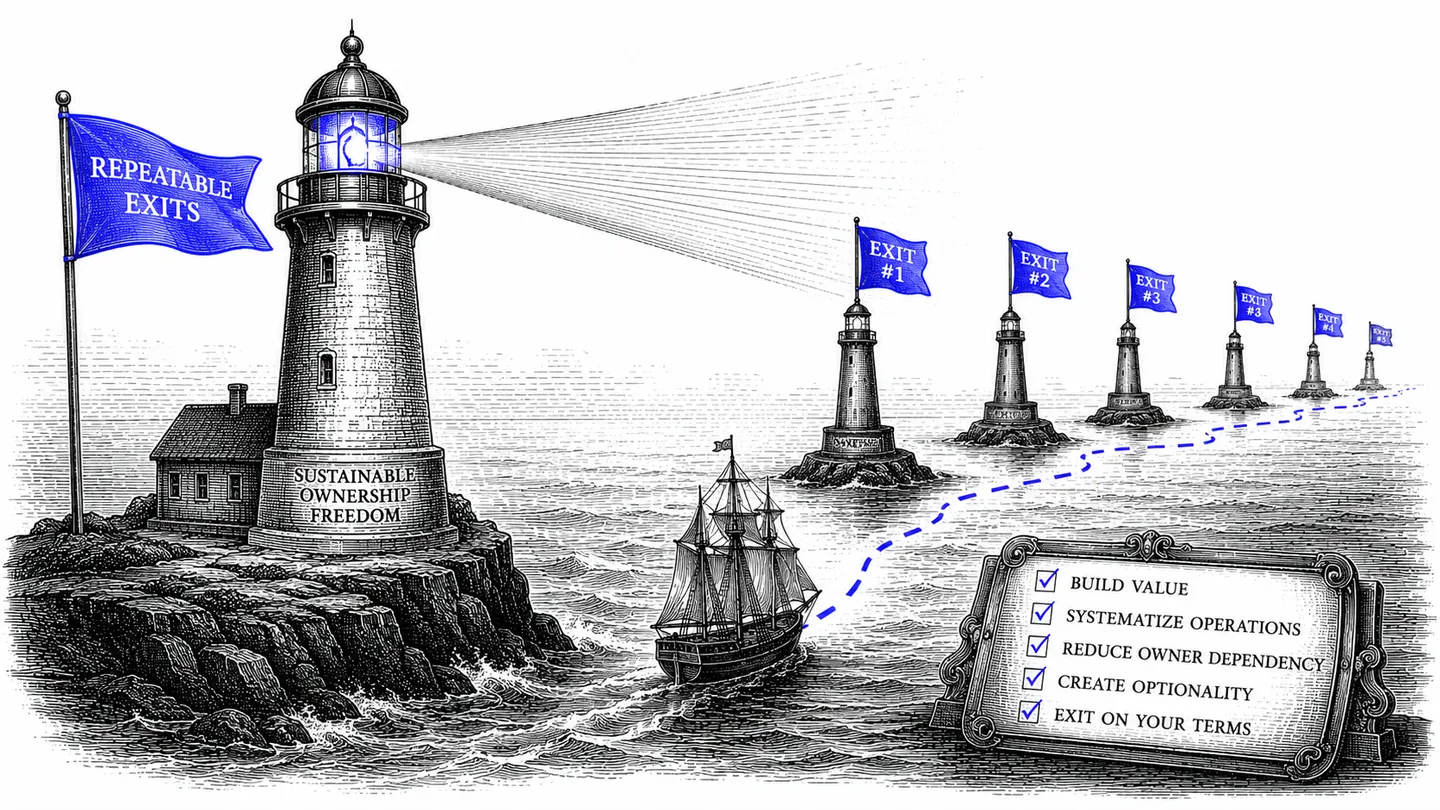
The unicorn exit is a bad plan. Here's the better one.
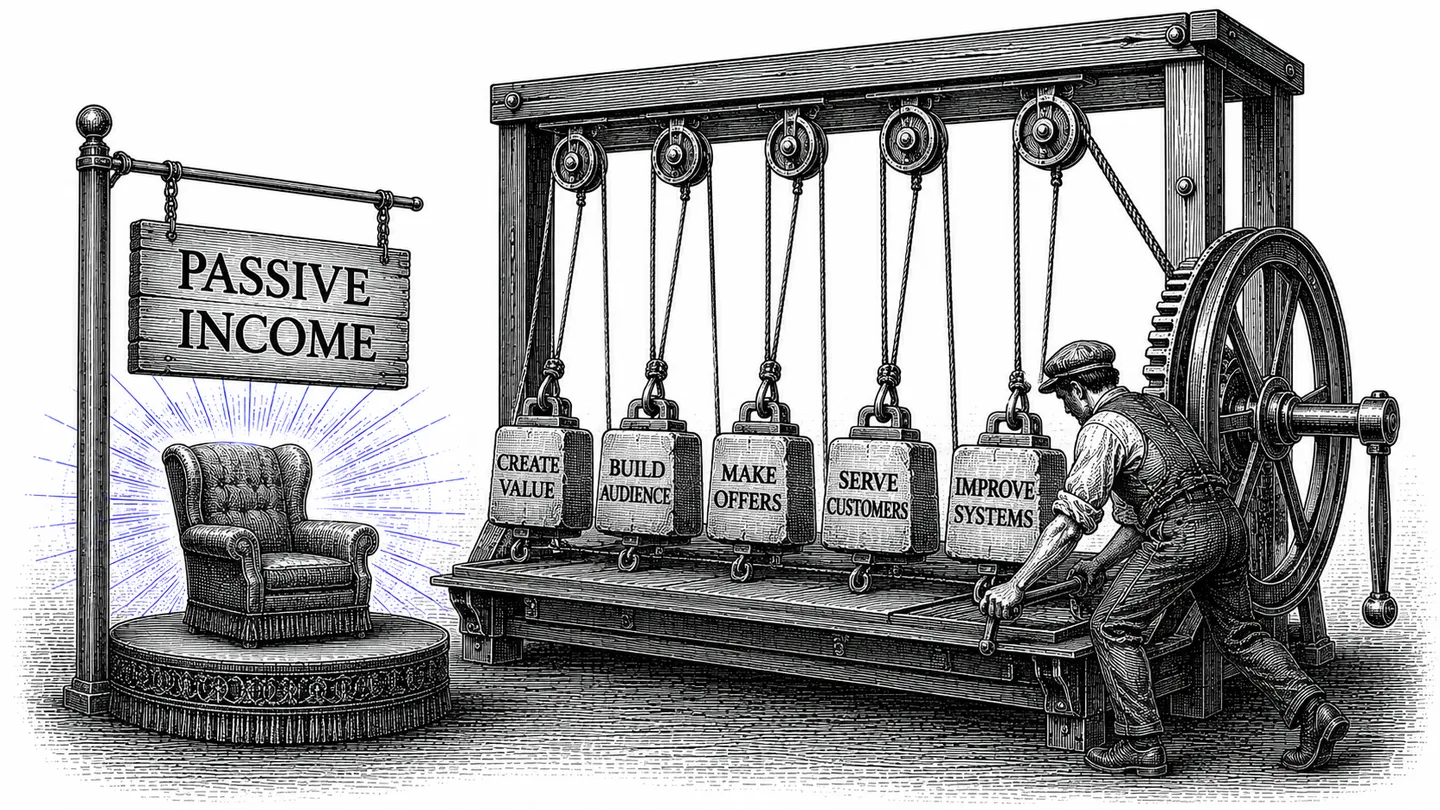
Every income stream decays without operation. The genuinely passive event is the one nobody markets: the exit.

How to outlast the flood of synthetic junk by building slow, sovereign, and human-first.