Agentic Commerce: What Buyers & Sellers of E‑Commerce Businesses Need to Know Before the Bots Start Buying

In short
Your next customer is a bot. Here’s how to sell – or buy – e‑commerce businesses built for AI, not clicks.
A growing share of online purchases now starts with an AI assistant rather than a human clicking around. Not SEO. Not influencers. Not a person browsing at all.
Bots.
They don't care about your vibes, your UGC, or your gorgeous lifestyle landing page. If your storefront isn't built for them, an agent can't see it at all.
Welcome to agentic commerce, where your next customer isn't a person but an AI agent executing tasks on behalf of one.
If you're buying, selling, or running an e-commerce business and you're not preparing for this, you're either overpaying for a future ghost town or selling a bargain-bin liability.
Here's the tactical version:
- Buying a store? How to spot one that survives the shift.
- Selling your brand? How to prep it for a premium price.
- Running a store? Your agent-ready stack.
Let's get into it.
1. What agentic commerce actually is (and why it matters)
Agentic commerce is bots with wallets.
AI agents like ChatGPT, plus the shopping flows now baked into payment networks and voice assistants, don't just recommend. They filter, compare, and buy, inside parameters a human sets for them.
They don't care how cute your product page is. They care about structured data, API access, and fulfilment speed.
We're no longer optimising for human attention spans. We're optimising for machine filters. This is the same structural shift that gutted the SEO gold rush and killed the content-site model – the interface changed, and the businesses built for the old one quietly stopped working.
2. Buyers: how to vet a store for agentic survival
If you're acquiring a micro-ecom brand, your due diligence checklist just grew a column: agent-readiness. It sits alongside the usual technical due diligence, not instead of it.
Green flags
Rich, structured product data. JSON-LD and Schema.org markup, every SKU detailed like a spec sheet. Bonus points if it already exports clean product feeds.
Feed and API infrastructure. Automated updates through proper feed tooling, not manual spreadsheets from 2021.
Tokenised checkout. Agent-friendly payment rails, ideally built for delegated authorisation. Bots can now hold and spend tokens directly, which is exactly the shift the x402 micro-payment stack – the open standard Cloudflare has built into its agent tooling – is designed for.
Fast, reliable fulfilment. Predictable dispatch, real review history, no mystery on delivery times.
Broad discovery. The brand shows up through chat interfaces, embedded feeds, and smart search, not only Google results pages.
A quick illustration: a niche pet-supply store with solid traffic, but 92% of it from TikTok and zero structured product data. Good numbers today, dead store walking tomorrow. Price it on trailing profit, the money it actually makes, and discount the traffic it's only hoping to keep.
Red flags
Listings full of "great fit!" and "high quality!" instead of actual specs. An agent can't parse marketing adjectives.
A business whose only lifelines are SEO and TikTok, one algorithm update from zero.
Checkout that needs four steps and a CAPTCHA. Agents don't wait around.
3. Sellers: how to make your store agent-ready (and worth more)
You want to sell a store buyers actually want, one that's machine-readable, scalable, and easy to plug into agent-driven ecosystems. Agent-readiness won't invent value that isn't there, but it does push a clean brand toward the top of its range on annual trailing profit.
Product data that doesn't suck. Real specs – sizes, dimensions, materials, tags – plus Schema.org Product markup.
Feed support everywhere. Daily updates, exported in standard formats to the major shopping feeds.
Payments built for bots. Tokenised and frictionless, through the standard processors.
Proof you're legitimate. A genuine review history and traceable fulfilment through a recognised provider. Buyers want evidence they can check for themselves.
Repeat revenue. Subscriptions or auto-reorder workflows that make future income predictable, which is what buyers pay a premium for.
Documentation like a professional. SOPs for operations, fulfilment, and tooling. This is the difference between a haggling buyer and a "we'll pay full asking" buyer, and it's the same build-to-sell discipline that lifts any bootstrapped exit.
4. The agentic tool stack: what actually matters now
Let's kill the idea that a chatbot plugin equals "agentic". Here's what actually counts, from basic to advanced:
| Function | Tools (basic → advanced) |
|---|---|
| Feed management | Shopify Feeds → DataFeedWatch → Feedonomics |
| Schema and metadata | Smart SEO → Plug in SEO → Schema Plus |
| Payments | Stripe → Checkout.com → Adyen |
| Reviews and trust | Judge.me → Loox → Trustpilot |
| Fulfilment | ShipStation → ShipMonk → ShipBob |
| Subscriptions | Rebuy → Skio → Recharge |
| Conversational agents | Postscript (SMS) → Voiceflow → Gorgias AI |
| API analytics | Plausible → Segment → Datadog |
Conversational interfaces matter only when they connect to agent-based triggers – SMS reorder flows, bot-initiated Q&A, and the like. A chatbot that just says "how can I help?" isn't helping.
5. The 90-day agentic conversion plan
Week 1–2:
- Audit every SKU for complete data.
- Add Schema.org markup.
Week 3–5:
- Set up product feed pipelines.
- Validate against the major shopping feeds.
Week 6–8:
- Migrate to tokenised checkout.
- Cut friction – no CAPTCHAs, fewer steps.
Week 9–12:
- Automate fulfilment and install a review workflow.
- Write SOPs for every key process.
- Integrate an agent-triggered chatbot or SMS flow.
Ongoing:
- Track bot traffic, API pulls, and metadata gaps.
- Review product feeds monthly.
Final word: miss this shift and you devalue your business
This isn't a trend. It's the new interface layer of commerce.
Ignore it, and you're either buying digital junk or selling your store for less than it's worth.
Search traffic is shifting to chat. Buyers are shifting to bots. The stores built to serve agents are the ones that hold their value.
Stay sharp, stay sellable
Want more no-fluff breakdowns like this one? We track what makes small digital assets genuinely worth owning in the age of bots, APIs, and AI agents. No hustle porn, just practical plays.
More on pricing

A single asking price starts a tug-of-war. A defensible range starts a better conversation. Here's how to build one.
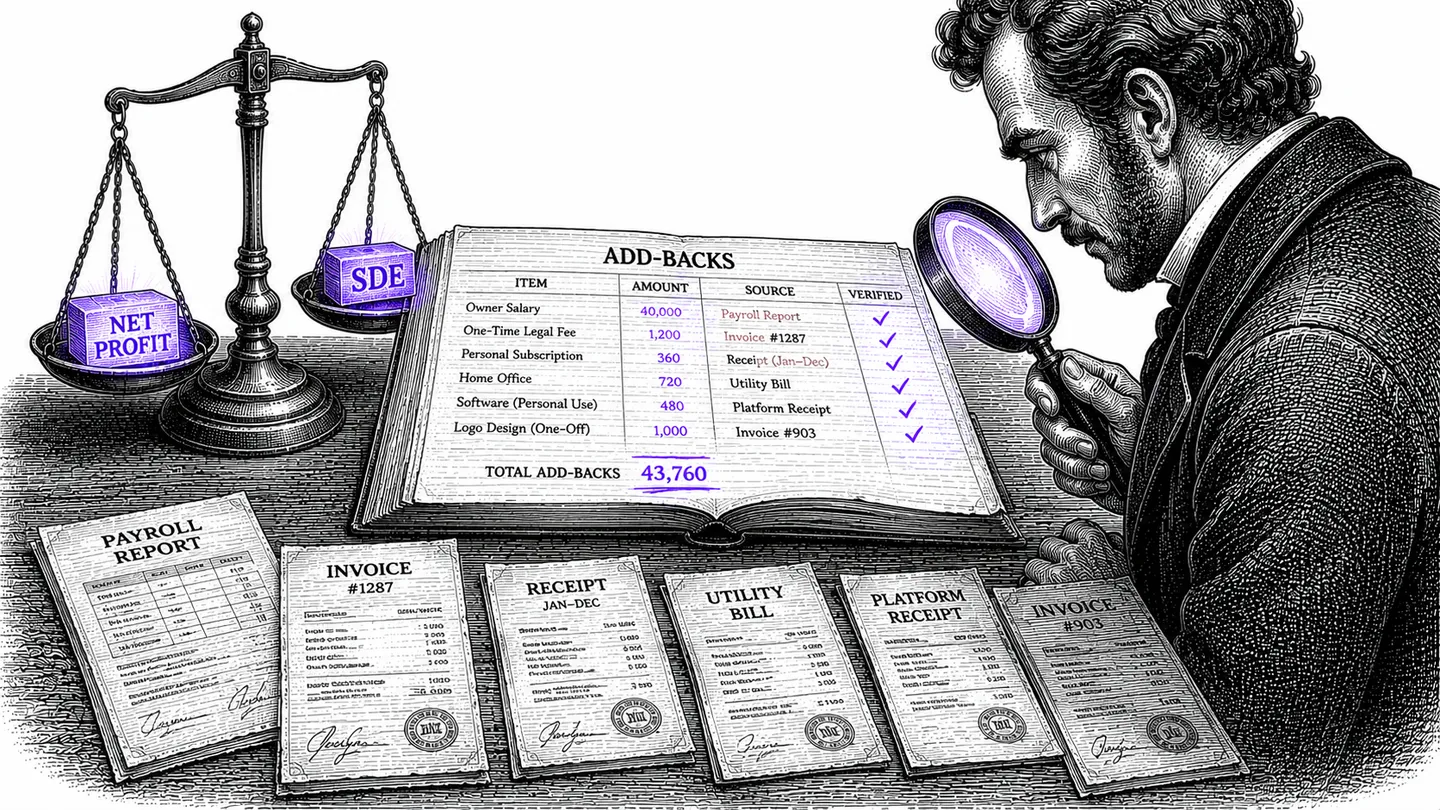
Add-backs are the most misunderstood line in a small-business valuation. Here is what an SDE add-back really is, which ones buyers accept, …

The multiple isn't the answer. Durable profit is. Here's how to price an asset when the foundation is borrowed.